
This post was updated April 2020.
Disclaimer: this post contains affiliate links. When you make a purchase through these links, I receive a commission at no extra cost to you.
Pimsleur vs Rosetta Stone
Pimsleur and Rosetta Stone are unique in the language learning world for a few reasons, but most notably are how old they are. They’ve both been around since long before the internet, and are still kicking to this day. So how do Pimsleur vs Rosetta Stone compare?
Both products maintain a lot of the same spaces in the language learning world, spaces that no other relevant products belong in, but there are absolutely some key differences to take note of, as well.
So, Pimsleur vs Rosetta Stone: if you’re going to give one of them a try, which should it be?
Pimsleur vs Rosetta Stone: similarities
Like I said, both products are very, very much alike. They’ve both been around for decades, and in some contexts, they could be considered the “original way to learn a language”.
You know what I’m talking about: where you dump a small fortune for a bunch of disks that you listen to in order to learn a new language before you go on a family trip abroad. Those ones!
So, yes, both Pimsleur and Rosetta Stone can be pricey, although both products have also worked a little bit to keep up with the times, now offering more reasonably priced subscription prices.
Both products historically teach languages by using a disk (CD-ROM for Rosetta Stone, audio CD for Pimsleur) but also now offer mobile apps.
Both also are great at having you listen to native speakers of the language, and have you actively speaking from day one as well. Which means they’re both pretty light on reading/writing, though each do have a little bit of that as well.
As you can tell, both Pimsleur and Rosetta Stone fulfill a market that is significantly different than the market for Mondly and Duolingo, for example. So what makes them different?
Pimsleur vs Rosetta Stone: the differences
First, each product offers you different languages…which is kind of important, obviously. Both Pimsleur and Rosetta Stone offer:
- Castilian Spanish
- Latin American Spanish
- French
- Italian
- German
- English
- Arabic
- Chinese
- Dutch
- Tagalog
- Greek
- Vietnamese
- Hebrew
- Hindi
- Irish
- Japanese
- Korean
- Farsi
- Polish
- Brazilian Portuguese
- Russian
- Swedish
- Turkish
The only other language that Rosetta Stone has to offer that Pimsleur doesn’t is Latin. Not only that, but Pimsleur also makes an effort to be very specific about which form of a language it offers; for example, Pimsleur doesn’t just mention Arabic like Rosetta Stone does, but also specifies Eastern, Egyption, and Modern Standard.
On TOP of that, Pimsleur offers ESL for speakers of a variety of languages, from Mandarin Chinese to Russian to Haitian. But wait, there’s more! You can also also ALSO use Pimsleur to learn:
- Albanian
- Armenian
- Croatian
- Czech
- Danish
- Persian
- Finnish
- Haitian Creole
- Hungarian
- Icelandic
- Indonesian
- Lithuanian
- Norwegian
- Ojibwe
- Pasto
- Punjabi
- Romanian
- Swahili
- Thai
- Twi
- Ukrainian
- Urdu
Clearly, when it comes to the flexibility of different languages, Pimsleur is the real deal. But that’s just the surface level of these platforms.
Defining fluency
I talk a lot about the meaning of fluency, and how figuring out your own definition of “fluent” makes such a huge difference when it comes to approaching learning a language. This concept is glaringly obvious when we compare/contrast Pimsleur vs Rosetta Stone.
Rosetta Stone
With Rosetta Stone, you will never ever hear or see a word in any language other than the one you’re studying. No translations, no explanations. You’re working 100% within the foreign language, even at the first lesson.
Rosetta Stone does this by first introducing you to the most basic words possible, so words like ‘boy’, ‘girl’, ‘to eat’, ‘to drink’, etc. It’s a very Duolingo-like approach, if you will.
You then use this vocab to piece together phrases and sentences for yourself, which takes a ton of brain space. After a couple lessons, you’ll find yourself exhausted because of the sheer amount of work your brain is doing to not only learn these words but also use them.
Pimsleur
Pimsleur, on the other hand, teaches you with translations. You’ll start off with a very simple phrase, hearing it in the language, and you’ll be told the English translation of that phrase. So, for example, you’ll probably learn a phrase along the lines of “do you speak English?”, a perfectly reasonable first phrase for a new language learner.
You’ll work to familiarize yourself with those words and understanding them piece-by-piece via the English translations in your head. So, unlike with Rosetta Stone, you’ll first learn by translating directly from English to your language and back.
This requires significantly less brain work and will teach you to recognize and understand the words, not figure out how to produce them on your own.
Neither one of these methods is wrong per se, but they definitely do approach language learning from completely different standpoints, and it’s up to you to decide which one you prefer.
How you learn
Apart from what Pimsleur and Rosetta Stone teach you, there’s a huge difference in how they teach it. This makes neither program one-size-fits-all, since their different methods are designed for language learners with different lifestyles, goals, and ways of learning.
Rosetta Stone
Unless you stick to Rosetta Stone’s app, you’ll be buying a set of CD-ROMS. Hopefully you have a computer with a disk drive (make sure you do before you buy, because you’d be surprised! CDs are going out of style, and newer computers are being built to reflect that) or else you’ll be out of luck.
Nonetheless, when you do get this disk set, you’ll install the program to your computer, and essentially play some games! The content may be fairly brain-intensive, but fortunately, the program itself isn’t.
Instead of using English translations, Rosetta Stones pairs new vocab with pictures that describe them. It’s a very natural way of figuring out what the words are for yourself, instead of constantly re-translating for yourself.
These games themselves last about 30 minutes, which is a significant amount of time to be actively using your brain in a new language. That’s the same amount of time as you might spend in a Verbling or italki session!
I personally found that after a couple of these lessons, my brain was done for the day. It’s amazing how far you can stretch your mind in half an hour!
Pimsleur
Pimsleur, on the other hand, is significantly more simple. While Pimsleur comes as a disk set (unless you opt for the mobile app) as well, they’re not a computer program - it’s a CD for you to listen to while on-the-go.
While Pimsleur’s lessons are also 30 minutes long, they’re not nearly as brain-intensive. It’s a whole lot of listening to phrases, repeating them, and getting a few pronunciation tips thrown in there every once in a while.
And really….that’s it! You have a PDF file of the phrases you’re hearing as well as an English translation, but those are secondary. So secondary in fact, that if you try to read/listen to them before completing the initial lesson, it’ll pop up and lightly suggest you do it in order.
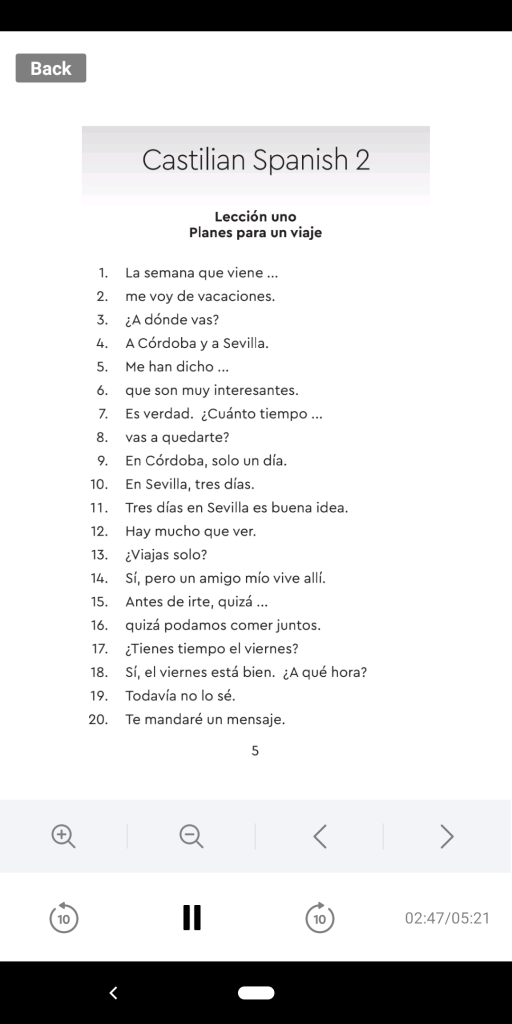
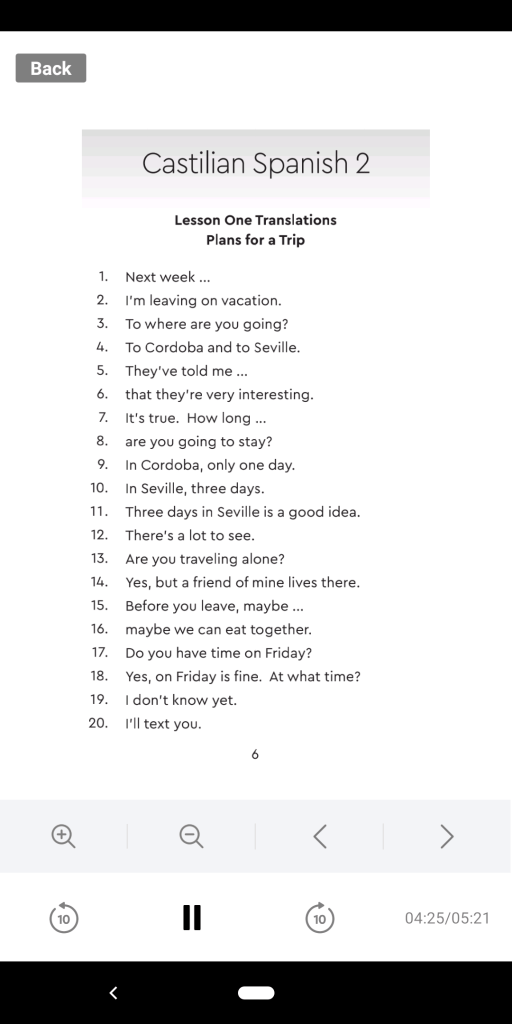
Oh yeah, and don’t even think about doing more than one lesson at a time! They take the Pimsleur Method very seriously, and this method is very clear that you’re only to practice for 30 minutes a day, every single day.
Speaking practice
Clearly, if you’re considering using Pimsleur vs Rosetta Stone to use a language, you want to learn to speak the language, right? Another big difference between the two is how they approach speaking practice.
Rosetta Stone
Once you’ve more or less proven you have the general idea of the words and the pictures they’re associated with, Rosetta Stone will have you say the words/phrases/sentences to get you speaking. The program has “speech-recognition” software to judge your practice.
I hate speech-recognition. It’s so iffy and you can never tell if you’re actually pronouncing it wrong or if it’s buggy because it’s not like it can give you feedback. It’s just not smart enough. Nonetheless, it is something, and if it keeps telling you you’re wrong, it does make you pronounce things very carefully.
You’ll be pushed to practice after every lesson, so you’ll get a full, well-rounded education of the words/grammar/phrases that you’re reviewing. And yes, that means actively putting pieces together in your brain and having them come out of your mouth!
Pimsleur
Pimsleur, on the other hand, doesn’t attempt to listen to the words you’re saying. There’s no microphone involved. You will be consistently prompted to say the words, and even prompted to respond to questions, though, which is a more active use of speaking practice.
This is a great way to piece together the words you’re hearing and put them together orally. Pimsleur’s recordings offer you a significant amount of time to figure out how to say the words so there’s no rush; if you’re being prompted to respond to a statement or question, you’ll get a bit of time to think first, and then the recording will respond for you so you can self-correct.
Pimsleur’s recordings are also very good at making a note of pronunciation differences between English sounds and the sounds you should be making, which is a great help. That being said, while Pimsleur doesn’t have you actively producing conversational statements quite as much, it is much more diligent in making sure you’re saying these things correctly.
Pricing
Ah, money. Both products are absolutely known for being outrageously expensive (like, $3-500 to learn a language!) which holds a lot of younger language learners back. Older generations who might have some spending money could find it easier to swallow.
They have both changed with the times, though, and both offer more reasonably-priced subscription services to go with their modern-day apps.
Rosetta Stone
I’ll be honest, Rosetta Stone is tricksy. If you buy the physical CDs brand new, you’ll be looking at a couple hundred bucks. Whew, pricey, right? Fortunately, their monthly membership is a bit cheaper…but only a bit, though.
Rosetta Stone still wants you to commit, even if you’re not buying a physical product. Their most recent price update includes a $200 lifetime membership which is on par with other language learning resources that offer a similar deal, but it’s still pricey for many language learners.
If you want to give it a shot, you can opt for a free trial, but only for a grand total of three (3) days!
Pimsleur
Fortunately, for us young’ins, Pimsleur’s subscription model is much more reasonable. The physical products themselves can still put you out several hundreds of dollars, but their monthly membership is less painful.
$15 a month is much more reasonable, and you can pay it as you go with no obligation to pay out $200, just so you feel guilted into sticking with it.
Of course, you can also opt for the 7-day trial, but be very careful that you’re not automatically charged when you don’t want to be because their return policy is real prickly. Basically, don’t count on getting your money back if you’re not happy!
Pimsleur vs Rosetta Stone: your choice
As you can see, even though both language learning products have some very strong similarities and characteristics that most other products don’t have, there’s still a world of difference between the two.
Rosetta Stone is best for learners who want to spend active time with the language, actively producing it for themselves from day one, even if it might come at a relatively steep price. But hey, it’s genuinely fun! Click here if Rosetta Stone sounds like your jam!
On the other hand, Pimsleur might be a better fit for busy language learners, who have some time for passive listening/repeating, and care more about being detailed and correct than being comfortable with the flow of conversation.
Either way, there is no wrong answer. You do you, boo!
Leave a Reply